
What exactly is a fade haircut
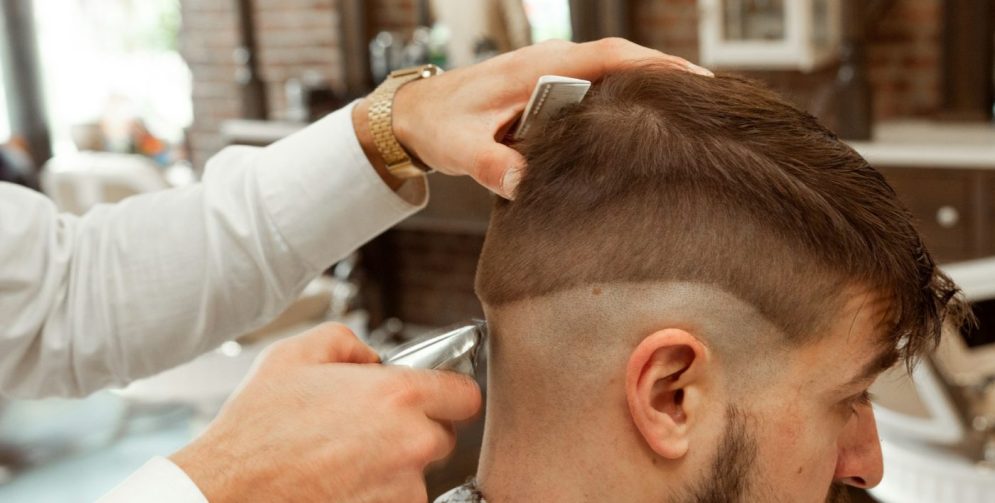
A fade is a short tapered cut where the hair gradually shortens from the top of the head down to the skin. The clipper work blends the length into bare skin, so there is no visible line between the hair and the skin. You get a clean, sharp transition that looks precise from every angle.
Barbers achieve this with a zero-gap clipper technique. The blades on the clipper are adjusted so they sit flush and cut closer to the scalp than standard trimmers. The barber moves through a series of guard sizes, often starting with a #2 or #3 and working down to a #0.5 or #000, shaving the lowest portion completely clean. The key is the blending lever; a skilled barber flicks the lever open and closed to erase any weight lines between the different lengths.
A regular taper also shortens the hair around the edges but stops before reaching the skin. Tapers leave a short shadow of stubble along the neckline and around the ears. A fade takes that same concept further by dropping the hair all the way to zero. The fade looks more dramatic and structured, whereas a taper feels softer and more conservative. If you want a cut that draws a sharp frame around your face, you ask for a fade and not a taper.
What is a low fade and who does it suit

A low fade starts just above the ear, about an inch from the hairline. The blend happens low on the head, leaving most of the hair on the sides untouched. This creates a subtle, conservative look. The taper is gradual, so the transition from skin or short stubble to longer hair is almost invisible at a glance.
This cut suits round and square face shapes best. The weight left on the sides adds structure, which balances wider jawlines and softens a round face. Men with longer faces can wear it too, but the extra bulk on the sides may exaggerate length. A low fade also suits professional environments where an undercut feels too aggressive. It works on straight, wavy and curly hair without changing the natural texture.
What is a mid fade and when to choose it
A mid fade starts its gradient roughly halfway between the top of your ear and the temple. The barber places the zero line in that middle zone, so the fade is visible from the front and the side without dominating your whole head. This creates a balanced silhouette that leaves plenty of hair on the back and sides while still looking sharp and intentional.
Choose the mid fade when you want a cut that works in a casual office, at the gym and on a night out with no adjustments. It pairs equally well with a classic side part, a textured crop or a slick back because the transition sits at the optical center of your head. If you are unsure whether a low fade will look too conservative or a high fade too bold, start with a mid fade. It also grows out neatly over two to three weeks, softening into a natural shape that does not need an immediate touch-up.
What is a high fade and how bold is it

A high fade starts the taper near the temples or just above the ear, leaving a narrow strip of longer hair on top while the sides are cut very short or down to the skin. The transition zone sits high on the head, often following the curve of the parietal ridge, which creates a sharp, defined silhouette that draws the eye upward.
This cut works best on straight or slightly wavy hair that can hold shape without much weight on the sides. Guys with round or square face shapes benefit the most, because the high fade adds height and angles that balance softer features. The contrast is sharp and modern, making it a natural fit for a disconnected undercut, a pompadour or a crop top with a hard part carved in.
How to describe your fade to the barber in three steps
Walk in with three clear details and you cut out the guesswork. First, name the fade height: low, mid or high. Second, tell your barber what you want on top, whether that is a textured crop, a side part or keeping the length for a comb over. Third, specify how you want the blend finished.
The blend causes the most confusion. You might want it compressed and sharp, where the transition happens in a tight band around your head, or stretched and gradual so the weight builds slowly. Mention if you want the back squared off or tapered down to the neck.
- Point to the exact spot on your head where you want the fade to start. Your temple, the top of your ear or your occipital bone gives the barber a fixed landmark.
- Say the number or guard you want left at the ridge. For example, ask for a mid fade down to skin with a 1.5 guard left at the parietal ridge.
- Describe the blend as compressed or stretched. A compressed blend leaves a darker band above the fade line, while a stretched blend feathers the weight higher.
- Specify the neckline finish as tapered, blocked or rounded. A tapered neckline fades out naturally, a blocked one cuts a straight line across the nape.
- Mention how you style your hair daily. If you slick it back, the barber should leave more weight at the front hairline to support the shape.
Which fade works best with your hair type and lifestyle

Straight hair holds a high fade exceptionally well because the contrast between the skin and the dense top creates a sharp, architectural line. Wavy hair pairs naturally with a mid fade, which leaves enough weight on the sides to control volume while the texture on top does the work. Curly and coily hair types benefit most from a low fade or a drop fade, as the gradual transition prevents the sides from appearing too hollow and keeps the shape balanced.
Thinning hair demands a low fade with a heavier blend. Keeping the weight low and the transition soft draws the eye upward and avoids exposing sparse areas. A high fade or skin fade on thinning hair can exaggerate the scalp show-through, so ask your barber to use a guard rather than a foil shaver for a stronger result.
Your weekly routine decides the rest. A high fade or skin fade looks crisp for about five to seven days, then the regrowth softens the outline and you need a touch-up. A low fade grows in more forgivingly and can last three weeks between cuts. If you hit the gym before work and rinse your hair daily, a mid fade with a textured crop keeps you looking sharp without a styling routine that demands product and a blow dryer.
What is a skin fade, burst fade and drop fade
A skin fade, also called a bald fade, takes the hair down to the skin at the lowest point. The barber uses a foil shaver or a straight razor to leave zero stubble along the neckline and around the ears. The blend then climbs into longer lengths, creating a sharp contrast that looks clean for about three to five days before the shaved line softens.
A burst fade curves around the ear in a semicircle instead of following the natural hairline. It starts behind the ear, arcs up and over it, and drops down in front of the sideburn. This shape frames the ear and works especially well with mohawks, faux hawks and styles where you keep length on top and at the back. The drop fade sinks lower at the back of the head, dipping behind the ear before leveling out at the nape. It follows the curve of the head and gives a rounded silhouette from the side, unlike a standard fade that runs in a straight horizontal line.
- Ask for a skin fade when you want the sharpest outline and are okay with a barbershop visit every 10 to 14 days to keep it crisp.
- Choose a burst fade if you wear a style with length at the nape and want the fade to highlight the ear area without cutting into the back.
- Pick a drop fade to soften a strong jawline or to add shape to a rounder face, since the dip creates a lengthening effect.
- Show your barber a photo of the specific variation. A picture removes confusion faster than describing the curve or the starting point.
FAQ
Is a fade the same as a taper
No. A taper shortens the hair gradually but leaves some length at the neckline and around the ears. A fade takes that gradient all the way down to bare skin, creating a more pronounced contrast.
How often do I need a touch-up to keep a fade sharp
Most guys get a fade refreshed every two to three weeks. The shorter the fade and the faster your hair grows, the sooner the line loses its crispness.
Can I get a fade if I have curly or thinning hair
Yes. A low or mid fade keeps enough weight on the sides to work with curls, while a high fade can make thinning areas more noticeable. Tell your barber about your hair texture so they can adjust the blend.
What should I bring to my barber appointment
Bring two or three photos of the exact fade height and top style you want. Photos from multiple angles help the barber see how the blend should wrap around your head.
