
What exactly is a French crop haircut?
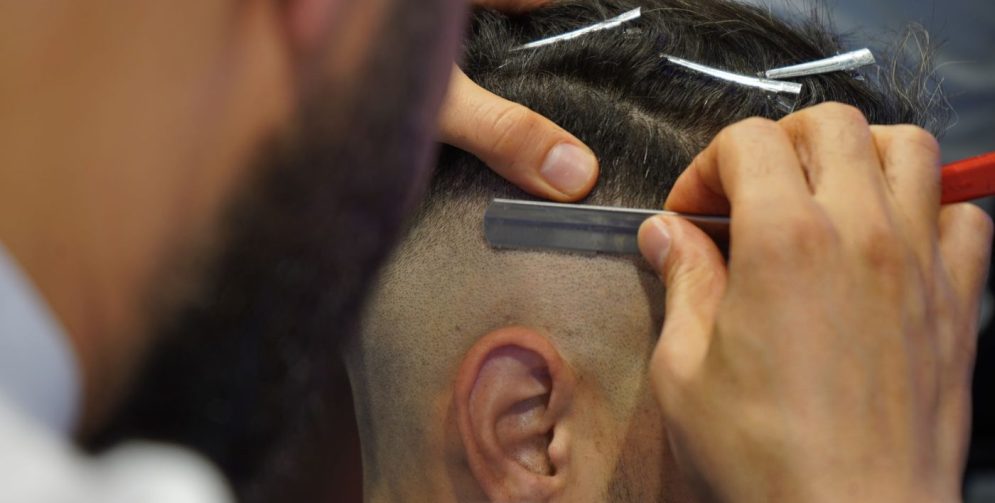
A French crop is a short men's haircut with clipped back and sides, a blunt horizontal fringe across the forehead, and a textured top. The fringe sits straight, not swept to the side. The sides are usually taken high with clippers and finished with a taper or a skin fade that blends cleanly into the longer hair on top.
The defining feature is the heavy, straight-across fringe that stops at the hairline. The top is kept short to medium in length, cut with scissors or thinning shears to create a choppy, piecey texture. This texture stops the top from looking flat or helmet-like. The crown and back are blended short, so the shape stays tight and neat around the head.
Barbers often use a grade 1 or 2 on the sides, sometimes going down to a zero for a skin fade. The top length depends on your hair type, but it rarely exceeds two inches. The result is a low-maintenance cut that looks sharp and deliberate without requiring much styling effort.
How is a French crop different from a Caesar cut?
Both cuts keep the fringe straight across the forehead, but the French crop leaves it noticeably longer and heavier. A Caesar cut fringe sits very short, typically no more than 2, 3 cm, and lies flat with no visible texture. On a French crop the fringe hangs forward with more weight, often reaching the middle of the forehead, and the barber cuts into it with point-cutting or texturising shears to create separation.
The silhouette tells you the rest. A Caesar cut is uniform in length all over the head, blending the top seamlessly into the sides with little contrast. A French crop keeps the top longer and drops the sides down to a skin fade, a taper or a short crop, which makes the fringe the focal point. Texture on a Caesar is minimal or absent. On a French crop the top is deliberately choppy, with short, irregular strands that add movement and a matte finish. If you want a clean, almost military look, ask for a Caesar. If you want a modern cut with a bold fringe and textured top, the French crop is the one to request.
What face shapes does a French crop suit best?
A French crop works particularly well for oval, square and diamond face shapes. The heavy, straight fringe shortens a long forehead and balances a narrow chin, which makes it a natural choice for oval and diamond proportions. For a square face the cropped sides and blunt top echo the jawline without softening it.
Round and heart-shaped faces can still wear the cut, but ask your barber to keep the fringe textured rather than blunt. A hard, horizontal line across the brow widens a round face further. Lightly point-cutting the fringe and leaving the corners slightly longer breaks up the width and keeps the look from feeling heavy.
If your face is long or rectangular, avoid taking the sides down to skin. Keeping some weight above the temples prevents the head from looking even longer. A softer, brushed-up version of the crop with less fringe coverage often works better for these shapes than the classic flat-forward style.
How do I describe a French crop to my barber?
Tell your barber you want a French crop with a short fringe and a skin fade. That gives your barber the silhouette. Then add the three details that make the cut yours: how short you want the back and sides, how heavy or textured you want the top, and whether the fringe sits straight across or has a slight point.
If you have a picture on your phone, show it. A photo from the same angle as the barber sees you eliminates guesswork. If you do not have one, use the script below. Say each point aloud and let the barber repeat it back. You will both know you are talking about the same cut.
- Ask for a skin fade on the back and sides, starting from a zero or a half guard and blending up to the top.
- Tell the barber to leave about two inches of length on top so you can style it forward.
- Specify a blunt, horizontal fringe that stops just above your eyebrows.
- Request point cutting or texturising shears on the top to soften the line where the fringe meets the fade.
- Confirm the crown stays connected to the top rather than cut short, so the shape holds when your hair grows out.
What are the most popular French crop variations?
Barbers adapt the French crop in four main directions, keeping the signature fringe and short sides while changing texture, length and the fade. Each variation shifts the overall feel of the cut, from sharp and clean to relaxed and casual.
- Textured crop. The top is cut with point-cutting or thinning shears to create separation and movement. It suits men with thicker hair who want a modern, undone look without heavy product.
- Skin fade crop. The back and sides taper down to bare skin, creating high contrast against the blunt fringe. This version works best on straight or slightly wavy hair and sharpens rounder face shapes.
- Messy crop. The fringe is cut unevenly and the top is left longer so it can be pushed forward or to the side with a matte paste. It suits a casual wardrobe and is forgiving on men with a wider forehead.
- Longer fringe crop. The fringe drops past the hairline and carries more weight, while the sides stay tight. It gives a softer frame to square and rectangular face shapes and makes a receding hairline less obvious.
Each variation keeps the low-maintenance roots of the French crop. The choice depends on how much contrast you want between the top and the sides, and how much time you will spend styling it in the morning.
How do I style and maintain a French crop at home?
You need a lightweight matte product that adds texture without shine. A clay or paste works best because the fringe sits forward and you want separation, not a wet look. Work a small amount between your palms and apply it to damp hair, not soaking wet.
Blow-dry your hair forward and slightly down toward your forehead. Use a brush or your fingers to direct the fringe flat while drying the sides in the direction they were cut. The goal is to set the shape before the product hardens, so the crop keeps its deliberate, blunt edge all day.
A French crop starts to lose its clean outline after two to three weeks. Book a trim every two to three weeks to keep the fringe sharp and the sides tight. Between visits, work a small dab of paste through dry hair to reset the texture if it falls flat by midday.
FAQ
Is a French crop a good choice if I have a receding hairline?
Yes, it is one of the best short cuts for a receding hairline. The forward-heavy fringe covers the temples and draws attention down to your eyes, while the cropped top adds density. Ask your barber to keep the fringe blunt rather than textured for the most coverage.
How short should I go on the sides?
Most French crops use a grade 1 to 3 on the sides, often finished with a skin fade or a taper. If your face is narrow, keep the sides slightly longer to avoid making your head look too long. A mid fade starting at a grade 0.5 is a safe, modern middle ground.
What product works best for a textured French crop?
A matte clay or a dry paste gives the piecey, natural finish that suits this cut. Work a small amount into towel-dried hair and push the fringe forward with your fingers. Avoid high-shine pomades, which can make a short crop look greasy and flat.
How often do I need a trim to keep a French crop looking sharp?
Every two to three weeks. The clean outline and tight sides grow out quickly, and the fringe starts to lose its blunt edge after about a fortnight. If you wear a skin fade, book every two weeks to keep the fade crisp.
