
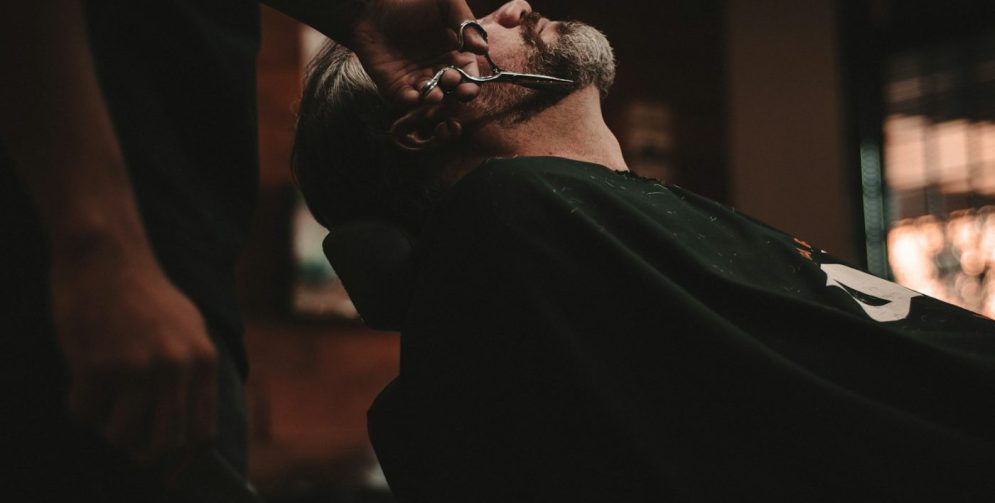
Where does a mid fade start?
A mid fade starts at the parietal ridge, roughly level with the top of the ear or a finger's width above it. That line marks where the clipped sides begin to blend into the longer hair on top. The exact height moves a little with head shape and hairline, so treat the ear as a landmark rather than a measurement.
The transition zone defines the cut, not a fixed millimetre. A mid fade leaves enough room for a gradual blend, usually over 1-2 inches, so the shorter sides flow into the top without a hard step. Ask for a mid fade and a good barber will set the line to your head, then soften it.
- The line sits level with the top of the ear or just above it.
- The blend runs over 1-2 inches for a smooth transition.
- Hair below the line is clipped short, hair above stays longer.
- Head shape and hairline can shift the line slightly.
How is a mid fade different from low and high fades?
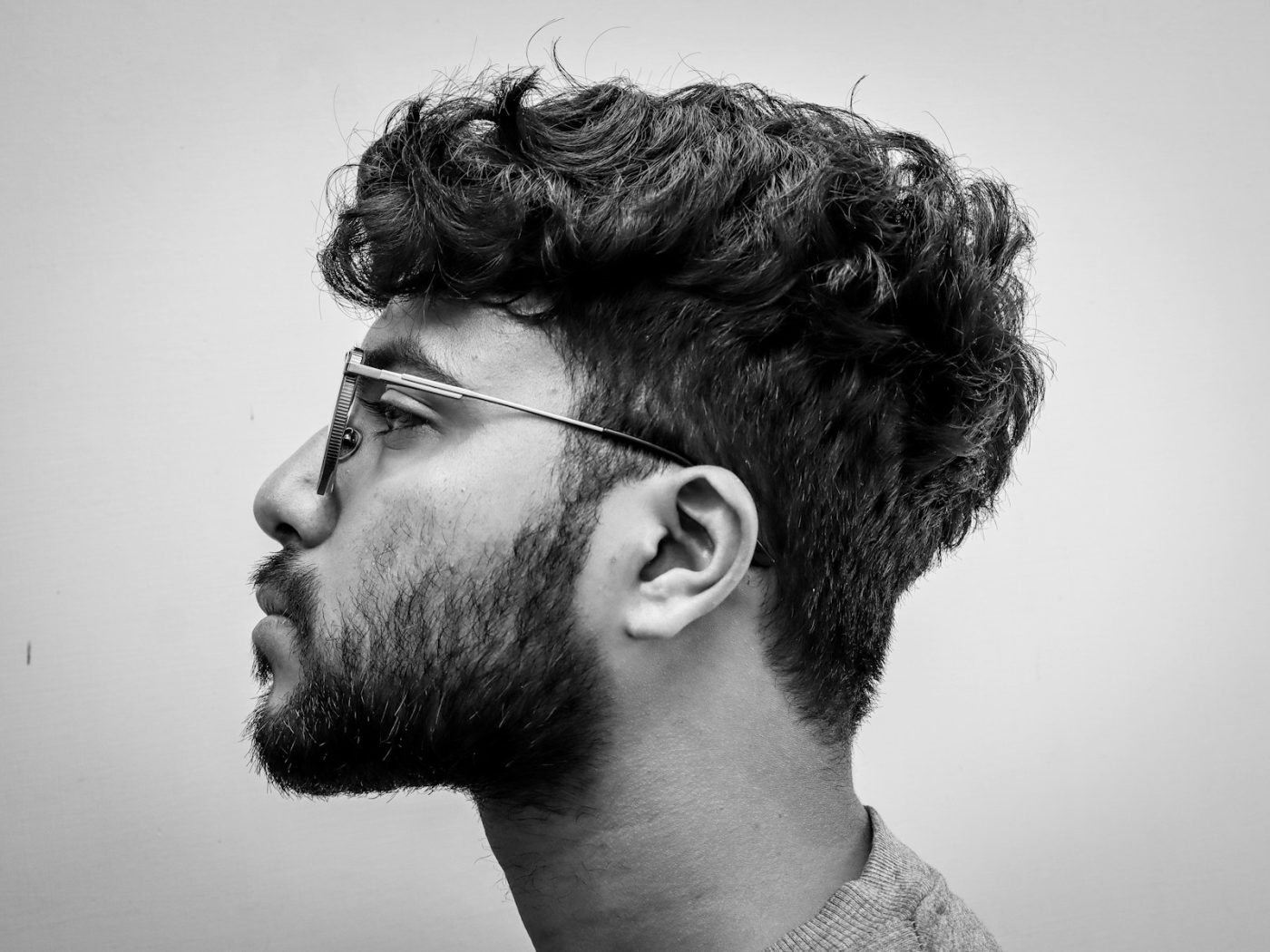
The three placements change how much hair stays on the sides, how the head reads in profile and how often you sit in the chair. A mid fade starts around the temple and the top of the ear, so it leaves more hair on the sides than a high fade and less than a low one.
- A low fade keeps the most hair on the sides and covers scars or a wider crown, but it grows out fastest and starts to look heavy in about two weeks.
- A mid fade balances the head, works on most face shapes and holds a clean line for roughly three to four weeks.
- A high fade removes the most side hair, makes a round or square face look longer and suits tight crops and curls.
- A low fade softens a long face, a high fade sharpens a wide one, and a mid fade sits between them.
- All three take the same clipper work, so pick by head shape and how often you want to return, not by trend.
Which tops work with a mid fade?
A mid fade suits almost any top as long as you match the length to the fade line. The fade removes weight at the sides, so a top with some texture or length keeps the cut from looking flat. Short, blunt tops read cleaner and more formal, while longer, layered tops look softer and more relaxed.
Textured fringe and French crop are the safest pairings. Both keep the front neat while the faded sides stay tight, and both grow out predictably between visits. Curls work well too, because the contrast between loose texture on top and clean sides is what makes the cut. A longer swept top needs more styling time but balances a high-contrast fade well.
- Textured fringe: short top, slightly messy front, minimal styling.
- French crop: blunt fringe, tight sides, easy to maintain.
- Curls: keep length on top, ask the barber to shape rather than thin.
- Longer swept top: needs product and a blow-dry to sit right.
Can you wear a mid fade with a beard?
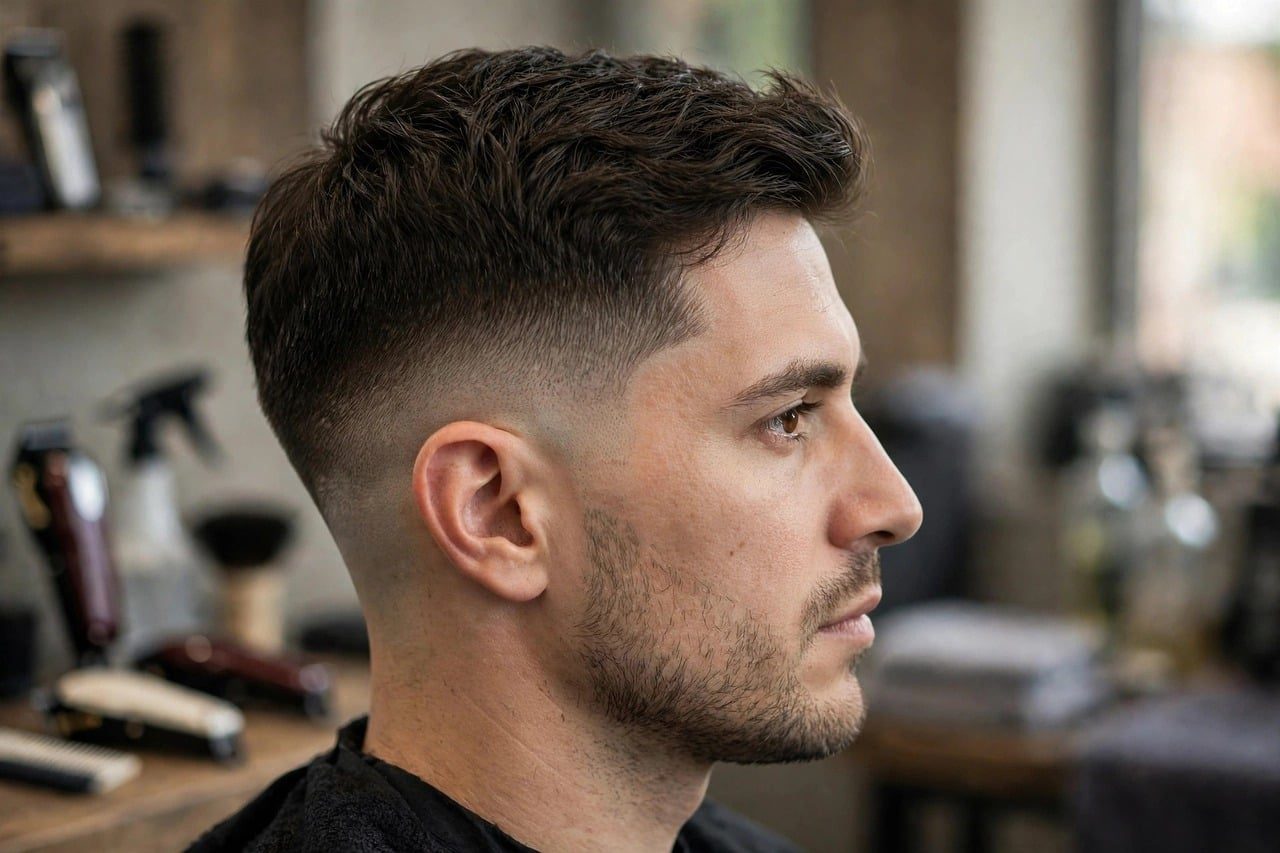
Yes. A mid fade and a beard work well together because the fade line sits right where the sideburn meets the jaw, so the two shapes can flow into each other. Ask the barber to keep the sideburn connected to the beard rather than cutting a hard gap between them. The fade should taper down to the skin at the ear, then blend forward into the beard line.
Ask the barber to outline the cheek line and the neckline at the same appointment so the transition stays clean. A soft, natural cheek line suits most faces. A sharp line works if you plan to maintain it every week.
- Ask for a taper fade that meets the beard at the sideburn.
- Have the cheek line outlined with a trimmer, not shaved to the skin.
- Keep the beard length even so the fade does not look heavier on one side.
- Book the beard trim with the haircut so both edges stay matched.
What do you tell the barber?
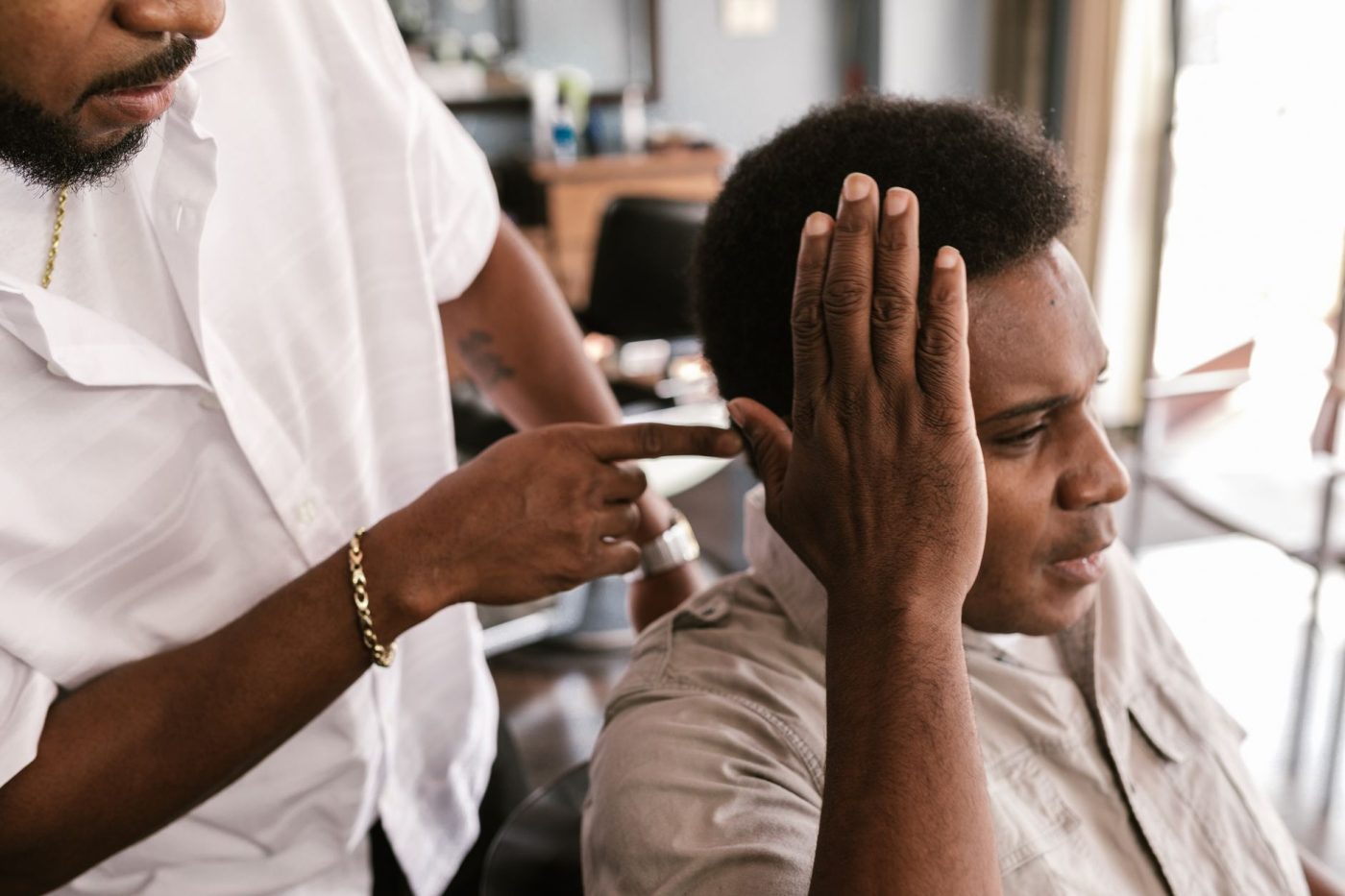
Say where you want the fade to start first. "Mid fade, start it at the temple" tells most barbers what they need. Then give the top length in a way they can check: "finger length on top, scissor cut" or "number 4 on top, blended into the sides."
Describe how you style it at home, because that decides how much weight the top needs. If you use paste and push the front up, say so. If you air dry and leave it flat, say that too. Bring one or two pictures of a cut you like on a head shaped like yours.
- Placement: "Start the fade level with the top of my ear."
- Top: "Scissor cut, about an inch and a half, textured."
- Sides: "Number 1 at the bottom, blended up."
- Finish: "Leave the neckline natural, no hard line."
- Reference: one photo from the front, one from the side.
How do you keep a mid fade looking sharp between visits?
A mid fade stays clean for roughly two weeks, then the first growth shows at the transition line, where the clipped sides meet the longer top. Wash with a mild shampoo two or three times a week and rinse after the gym, because oil and sweat flatten the sides and make the fade look heavier than it is.
Style damp hair with a matte clay or paste on the top only. Keep product off the faded sides, where it clumps and shows every uneven patch. At night, sleep on a satin or soft cotton pillowcase to reduce friction, and press the top flat with your palm in the morning before you add product.
- Book the next cut at the chair, usually every 3-4 weeks for a mid fade.
- Ask for a neck and line-up tidy between full cuts if your shop offers one.
- Comb the top back or to the side daily so the shape holds.
- Skip heavy pomade on the sides, it darkens the blend.
FAQ
How often does a mid fade need a trim?
Most men come back when the transition line starts to blur, usually within a few weeks as the sides grow out. A quick clean-up around the sides keeps the shape longer than a full cut every time.
Does a mid fade suit a round face?
Yes, because the fade removes bulk at the widest part of the head and the top adds height. Ask the barber to keep some length on top and to leave a little weight at the corners rather than taking the sides down to skin.
Can I get a mid fade with curly hair?
Yes. Curls work well with a mid fade as long as the barber cuts the top dry or with the curl pattern in mind, so the shape stays even after it springs up. Show how you wear it day to day, not just styled for the chair.
What is the difference between a mid fade and a taper?
A taper only shortens the hair at the neckline and sideburns, while a mid fade takes the sides down to the skin or a very short guard up to the middle of the head. A taper grows out more quietly, a fade shows its line sooner.
