
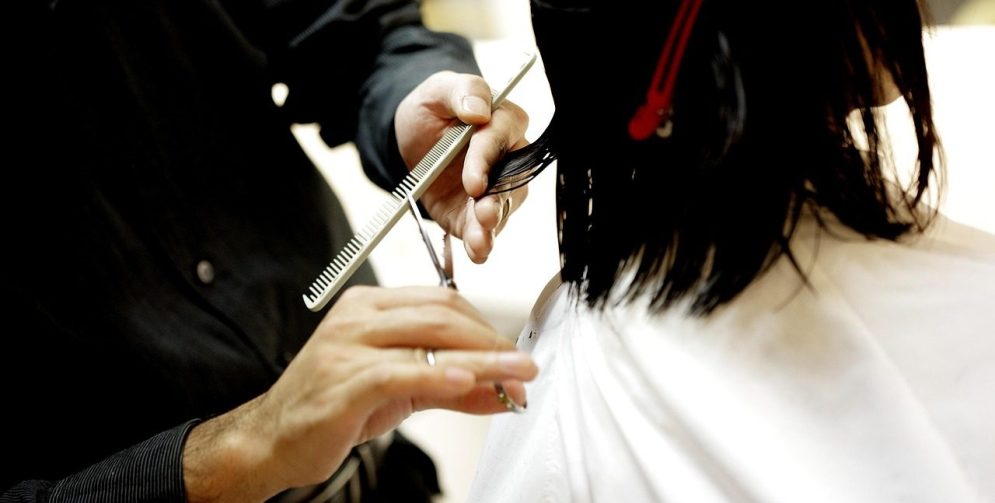
What Is a Medium Short Haircut for Men?
A medium short haircut keeps the hair on top between 2 and 4 inches long while the sides and back are cut shorter, usually with a fade or a taper. The top has enough length to part, sweep to the side, or push back, but not so much that it flops over or requires constant tucking. The sides are blended into the top rather than left as a disconnected shelf, which keeps the shape clean and deliberate.
This length sits right between a short crop and a longer flow. A short cut, like a buzz or a high fade with a few inches on top, gives you one basic shape with little room to change the style. A long cut, where the fringe reaches the eyes and the sides grow past the ears, needs more drying time and product to look intentional. The medium short range gives you enough hair to work with in the morning without the upkeep of a longer style.
The sides and back are what anchor this cut. Most barbers use a mid or low fade, or a classic taper that leaves a bit of weight around the temples and neckline. That taper keeps the cut from looking like a disconnected undercut and makes the grow-out softer over the next few weeks. The back is typically squared or slightly rounded, depending on your neckline, and the sideburns are cut to the top of the ear or just below it.
Which Face Shapes Does a Medium Short Cut Suit?

A medium short cut suits almost every face shape once you adjust the proportions. The aim is to add height or width where nature did not, using the hair as a tool. Your barber will alter the silhouette based on what you bring to the chair.
An oval face is the easiest starting point. The balanced proportions mean you can wear the cut straight up with no need to compensate. Keep the sides neat and the top at a natural medium length, and you are done.
A round face benefits from height on top to lengthen the overall look. Ask your barber to leave more length through the crown and keep the sides tighter. Avoid a heavy fringe that falls forward, as it shortens the face again. For a square face with a strong jaw and wide forehead, soften the corners. Keep a little weight on the sides rather than skin-fading them to the bone, and add texture on top to break up the blocky outline.
For an oblong or rectangular face, add width, not more height. Keep the top shorter and ask for more volume through the sides to fill out the silhouette. Wearing the fringe down shortens a long forehead and balances the whole face in a few seconds of styling.
What Hair Types Work Best With This Length?
A medium short haircut works on virtually every hair type, but the way it behaves depends on your natural texture. The same two to four inches of length will sit differently on straight hair than it does on tight coils. The cut itself rarely changes. What changes is how your barber layers it and how you style it afterward.
Straight hair shows every cut line clearly, so blunt scissor work and subtle texture points matter. Wavy hair holds shape with the least effort. A quick blow-dry or a small amount of product adds movement without fighting the natural pattern. Curly and coily hair types need more internal layering to stop the silhouette from turning into a triangle. You remove bulk where you do not want it while keeping the length on top controlled and intentional.
- Straight hair asks for precise, light layering so the ends do not sit too heavy or look flat.
- Wavy hair needs the least intervention. A medium short cut lets the wave do most of the work.
- Curly hair benefits from longer layers cut in dry to match your actual curl pattern.
- Coily hair holds a crisp shape well when the barber tapers the sides and leaves enough weight on top to prevent shrinkage from pulling it too short.
- Fine hair of any texture looks fuller with a blunt perimeter and minimal layering that preserves density at the ends.
How to Ask Your Barber for a Medium Short Haircut

Walk in with a clear description of the three zones: the top, the sides, and the transition between them. Tell your barber you want to keep enough length on top to part the hair or push it to one side, roughly two to three inches. For the sides, specify a clipper guard number instead of a vague term like "short." A number 3 or 4 guard leaves the hair long enough to avoid scalp show-through, the defining feature of a medium short cut. The neckline finish matters just as much as the top length, so include that in your request.
Bring a photo of the exact cut you want, but only if the model has a similar hair type and head shape to yours. A picture removes guesswork and gives your barber a concrete target for the shape. Even with a photo, you still need to describe the technical details in words. A good barber will ask follow-up questions about how you style your hair at home and where you prefer the weight to sit. Answer honestly about your morning routine, because a cut that requires a blow-dryer every day will disappoint you if you are a towel-dry-and-go person.
Use these exact phrases when you sit in the chair:
- "Leave two to three inches on top, long enough to part on the side and tuck behind the ear."
- "Taper the sides down to a number 3 guard, not a skin fade."
- "Blend the crown so it doesn't mushroom out, but keep the weight through the parietal ridge."
- "Square off the neckline, natural finish, no hard line shaved in."
- "Texturize the ends on top with scissors, not a razor, so I can wear it messy or neat."
How to Style a Medium Short Haircut at Home

To style a medium short cut, create movement and texture. The extra length gives you more options than a buzz cut, but it still requires a quick routine to look intentional. Most styles fall into two camps: a neat, brushed look or a messy, textured finish. Your choice of product and whether you use a blow dryer decides the result.
Start with damp, towel-dried hair. A blow dryer sets the foundation. Rough-dry your hair by moving the dryer around your head with your fingers, lifting at the roots to build volume. Once the hair is about 80 percent dry, switch to a brush or a vented comb to direct the hair into its final shape. Aim the airflow from root to tip to smooth the cuticle and reduce frizz.
Product goes in last, and a little is all you need. Warm a dime-sized amount between your palms and work it through from back to front. For a matte, reworkable hold with a natural finish, a clay or paste works well. If your hair is fine and needs volume without weight, a mousse applied to damp hair before drying gives a lighter structure. The key is to keep the product off your scalp and focused on the mid-lengths and ends.
- Dry your hair until it is just damp, not soaking wet, before applying anything.
- Use a blow dryer with a concentrator nozzle to direct air and smooth the hair.
- Pick a matte clay for a textured, undone look on straight or wavy hair.
- Choose a styling paste for a medium hold and a slight sheen on thicker hair types.
- Apply mousse to the roots on towel-dried hair before blow-drying for all-day volume.
- Finish with a blast of cool air from the dryer to lock the style and add a natural shine.
How Often Should You Trim a Medium Short Cut?
A medium short haircut needs a barber visit every 3 to 4 weeks to hold its shape. Hair grows roughly half an inch a month, and after four weeks the clean lines around the ears and neck start to blur. If your cut has a fade or a taper, the contrast between lengths disappears even faster. Book your next appointment before you leave the shop so the cut never loses its structure.
You can stretch the interval to 5 weeks with a simple maintenance trick between visits. Ask your barber to clean up just the neckline and around the ears. Many shops offer this as a quick 10-minute service, often at a fraction of the full cut price. It keeps the outline sharp without touching the top or the sides, so you look tidy while the main shape grows out on schedule.
Between trims, do these three things at home to keep the cut looking intentional, not overgrown:
- Wipe down your clippers or trimmer after every use so the blades stay sharp.
- Use a small handheld mirror to check the back of your neck once a week and spot stray hairs early.
- Stick to lightweight styling products on the longer top section to avoid buildup that makes hair look heavier and less controlled.
- Comb or brush the top into place every morning to train the direction and prevent random parting.
The exact timing depends on how fast your hair grows and how tight the original cut was. A scissor cut with softer edges can last closer to 5 weeks, while a skin fade demands attention at the 3-week mark. Watch the point where the short side meets the longer top. When that line blurs, it is time to get back in the chair.
FAQ
Is a medium short haircut professional enough for the office?
Yes. The length keeps the top controlled while the tapered sides look neat. Pair it with a side part or a clean quiff and it fits any business-casual or formal setting.
Can I pull off a medium short cut if I have a receding hairline?
Often yes. Keeping the fringe slightly longer and textured forward can soften the hairline. Ask your barber for a forward-swept crop rather than a slicked-back style, which can expose more of the forehead.
What is the difference between a fade and a taper on the sides?
A fade blends the hair down to the skin, while a taper gradually shortens the hair but leaves some length at the bottom. Both work with a medium short top. Tapers tend to look softer, while fades give a sharper outline.
Do I need a blow-dryer for this haircut?
Not always, but a blow-dryer gives you more control. If your hair is straight or wavy, a quick rough-dry with a vented brush adds volume. Curly and coily hair can air-dry with a curl cream and still hold the shape well.
